Relationship and resource modeling
I am designing a PostgreSQL schema that represents people, their relationships and the dependencies between shared resources.
I’m designing household data models and reusable routines, with conflict checks and human approval for sensitive actions.
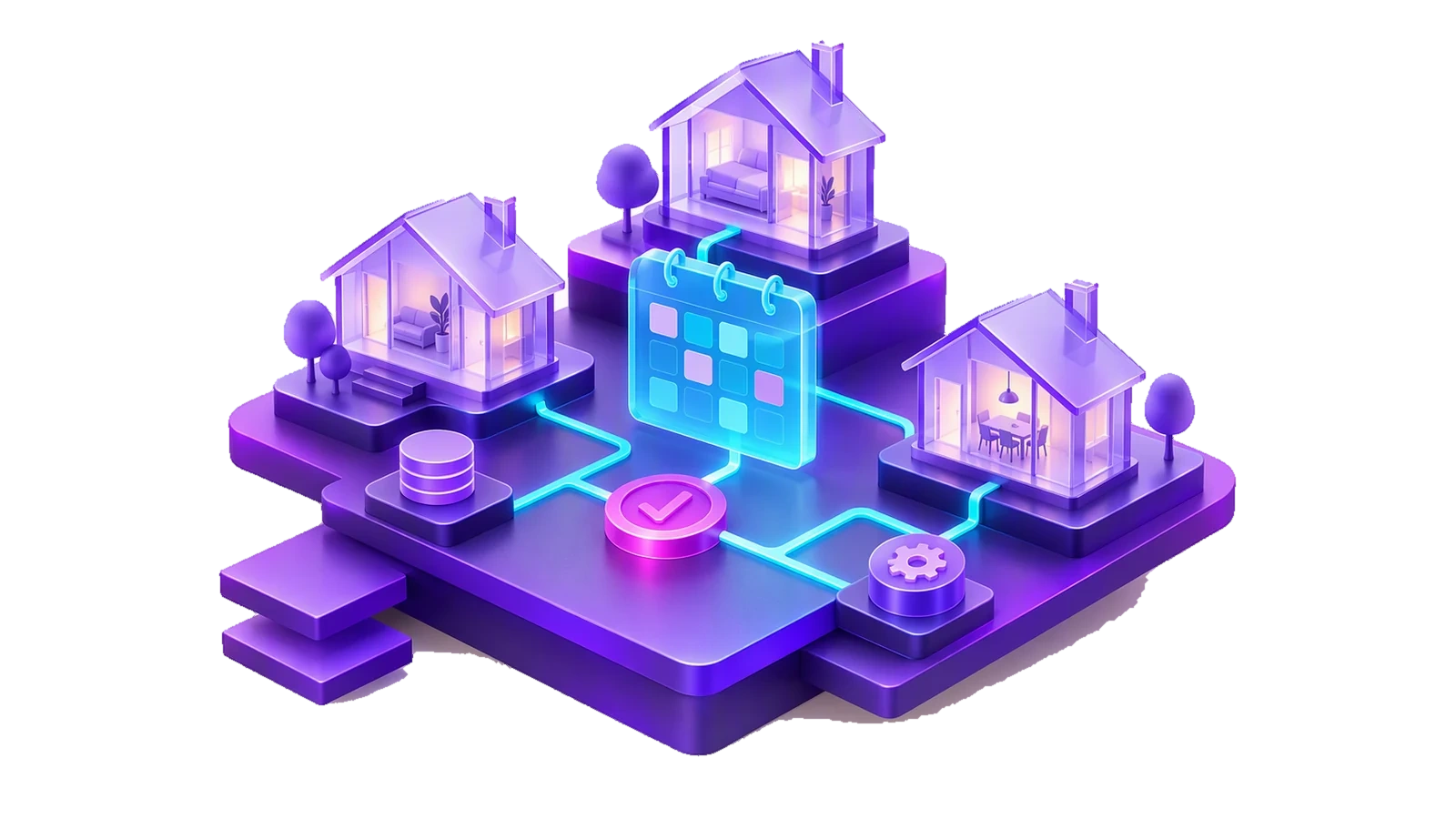
Household coordination involves people, relationships and shared resources—not just isolated tasks. Family OS explores how a structured model of those dependencies can support recurring routines and proactive briefings while keeping financial or irreversible actions subject to explicit authorization.
These tools and model references belong to the current project design.
I am designing a PostgreSQL schema that represents people, their relationships and the dependencies between shared resources.
My architecture work includes versioned executable routines, deterministic conflict and policy layers, and explicit authorization boundaries.
The design combines Deno Edge Functions with DeepSeek-V3 for conversational processing and DeepSeek-R1 for logistical optimization, alongside event-, webhook- and cron-driven briefings.
Begin with a household request or a relevant scheduled or external event.
Relate the request to people, responsibilities and resource dependencies.
Form a candidate routine or plan using the available context.
Evaluate the proposal against conflict rules and policy boundaries.
Keep sensitive or irreversible execution behind explicit permission.
Natural language makes requests expressive, while deterministic checks can provide a separate basis for deciding whether a proposed action is permitted.
A briefing is useful when it supports a real coordination need. Timing, relevance and the cost of interruption deserve consideration alongside automation.
Versioned routines raise an important question: which behavior should an existing schedule retain when a skill changes?
The system sequence is a conceptual summary, not an exact execution trace. It simplifies the relationship between reasoning, policy and authorization; the considerations discuss architectural tensions rather than claim particular deployed behavior.