Combat and enemy behavior
I worked on behavior trees, enemy and combat systems, including melee interactions, dodging, hit reactions and Motion Warping.
At Subrickzz, I developed combat, enemy behavior and reusable mission systems for a sci-fi action game.
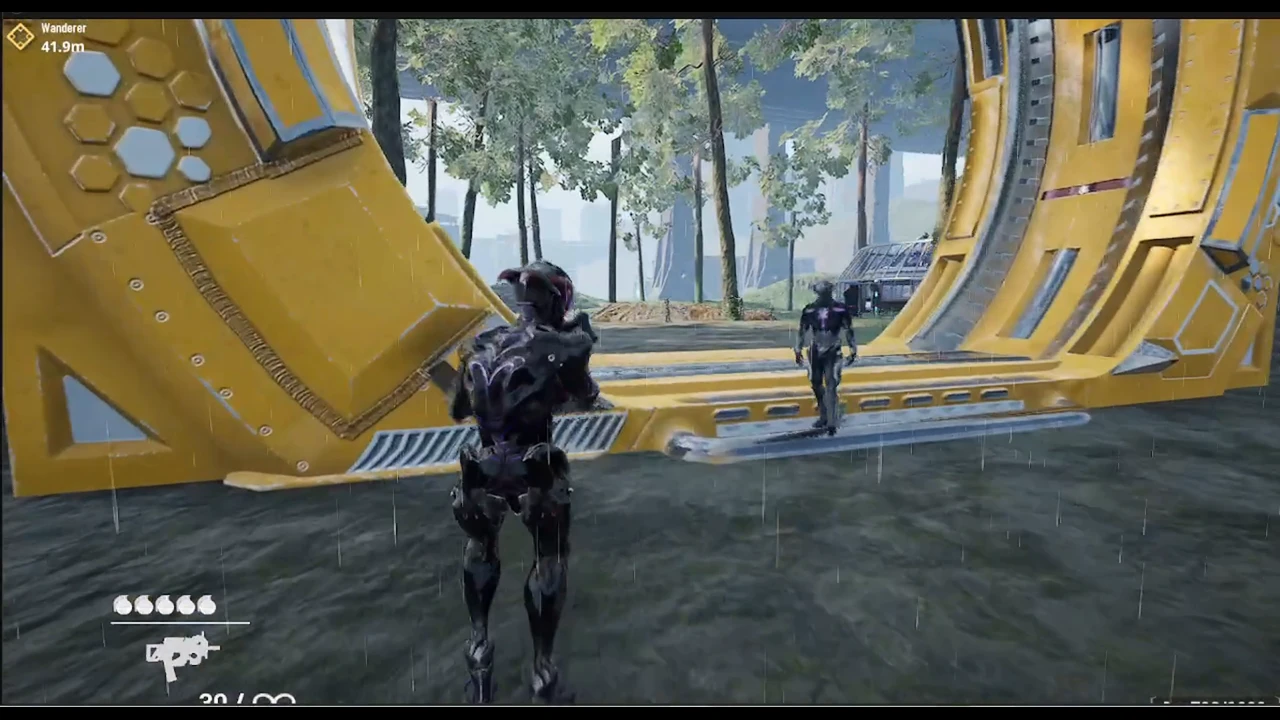 Watch the prototype44-second showcase
A brief ruined-city transition, followed by selected Spirit, Iggy/Scorch and Reaper encounters. The edit keeps the original HUD and development context visible.
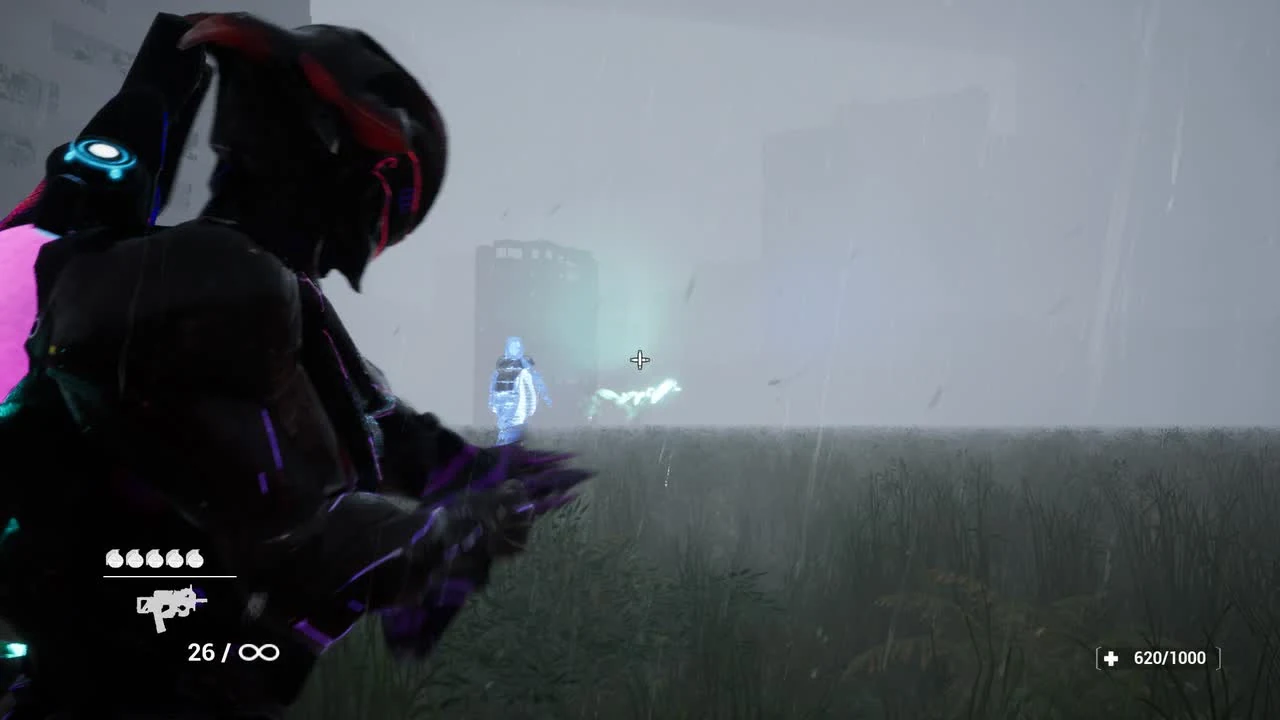
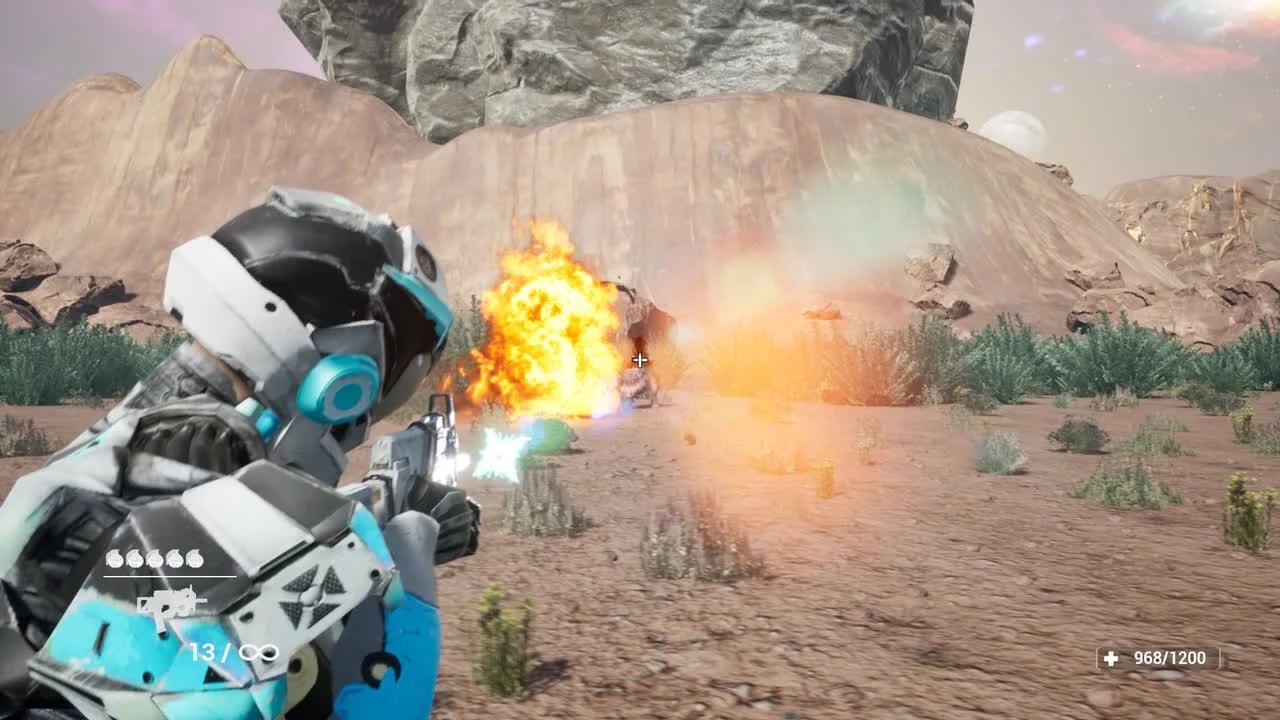
Action gameplay depends on systems responding coherently to the same moment: enemy behavior, combat reactions, animation and mission progression. My work on Cosmo Conqueror connected those layers through reusable gameplay logic. I also designed 33 story-driven missions, with branching narrative and reusable mission frameworks.
Tools used across my gameplay development and integration work at Subrickzz.
I worked on behavior trees, enemy and combat systems, including melee interactions, dodging, hit reactions and Motion Warping.
I designed 33 story-driven missions and worked on branching narrative, reusable mission frameworks and progression systems.
My contributions included gameplay architecture, Blueprint optimization and work with Chaos and Niagara.
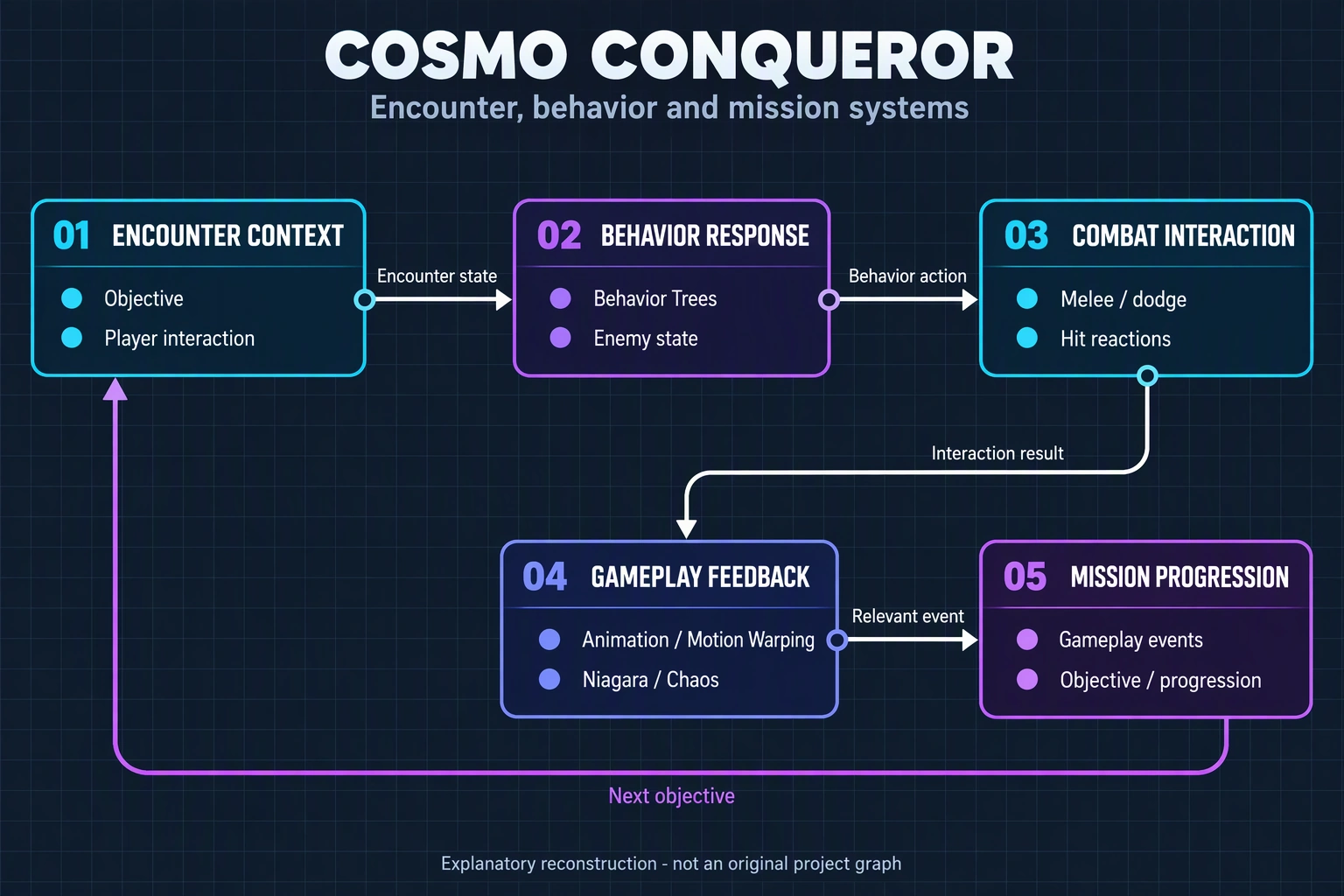
Frame the current objective and the player’s interaction with an encounter.
Represent how enemy behavior can respond to the encounter’s changing state.
Connect player and enemy actions with movement, contact and reactions.
Relate those interactions to animation and effects that communicate the moment.
Connect relevant gameplay events to the broader objective and progression loop.
My documented work connects Behavior Trees, combat interactions and mission state. The development map summarizes that relationship; it is an explanatory reconstruction rather than a capture of the project’s original Blueprint graph.
I designed 33 story-driven missions and reusable mission frameworks. Organizing related gameplay events into shared logic helped structure the work across the human and alien perspectives.
Motion Warping, Niagara and Chaos formed part of my integration work. The separate clips show encounter movement, attack feedback and a graybox projectile test. They demonstrate prototype behavior without establishing ownership of every animation or environment asset.
Combat feels responsive when input, movement and reactions agree. Coordinating them becomes more demanding as interactions overlap.
Shared mission logic can support consistency, while encounter pacing and narrative context still need room for variation.
Enemy behavior needs to serve the player-facing encounter as well as the internal logic. Clear reactions help make changing combat states understandable.
The videos are edited silent excerpts from development recordings of my work at Subrickzz. They show gameplay and a separate graybox projectile test, with prototype HUD and diagnostic feedback retained. Individual environment and character assets are part of the wider game. The mission count refers to design work; these recordings do not establish a shipped release or measured performance.