Gameplay systems and Blueprint development
I worked on the Unreal Engine 5 project using Blueprint scripting, connecting survival activities, player interactions and persistent game state within the wider game.
My award-winning Unreal Engine 5 final-year survival game, connecting exploration, crafting, construction and progression.
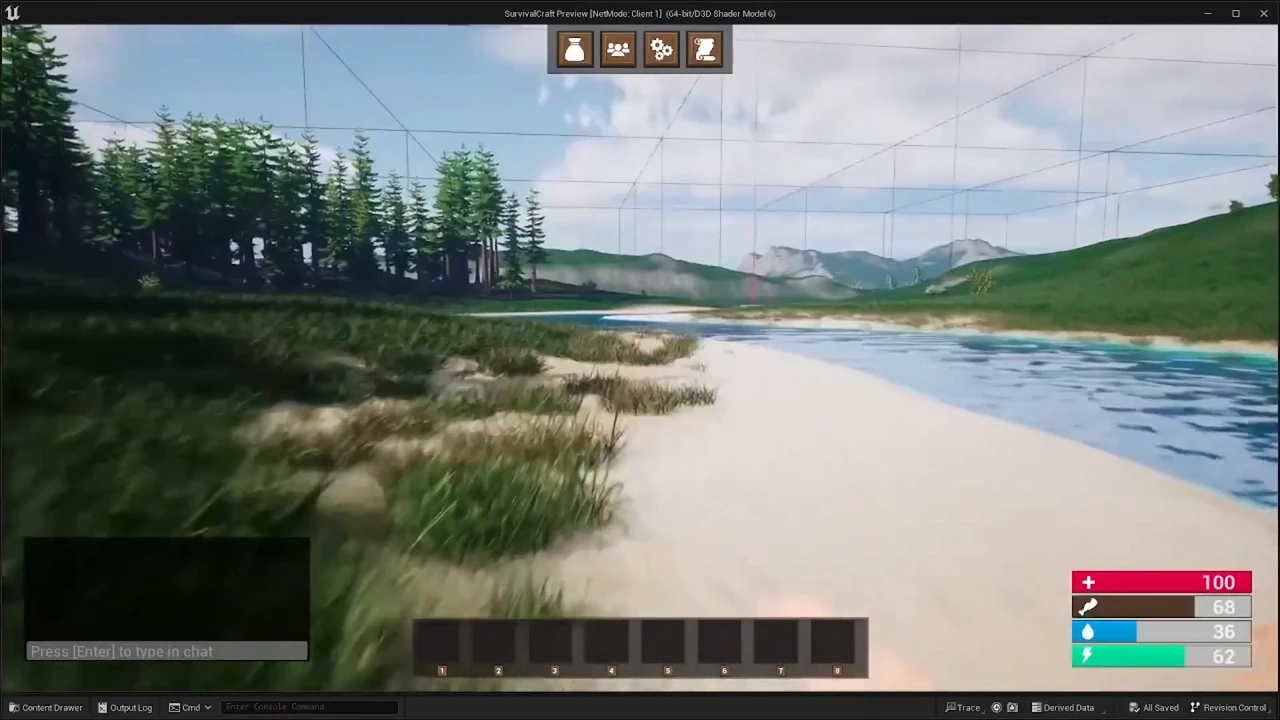 Watch the prototype60-second showcase
A selection of exploration, inventory, crafting, construction and multiplayer test moments. Editor interfaces remain visible where they appeared in the supplied recording.
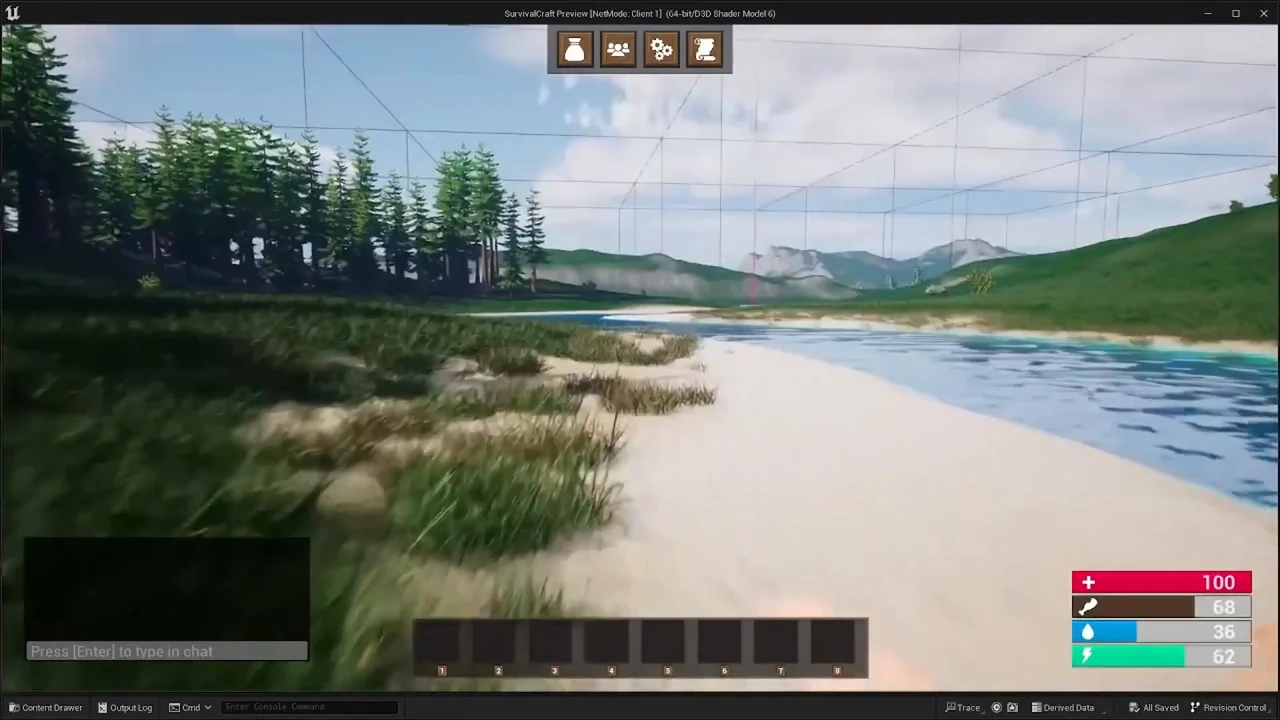
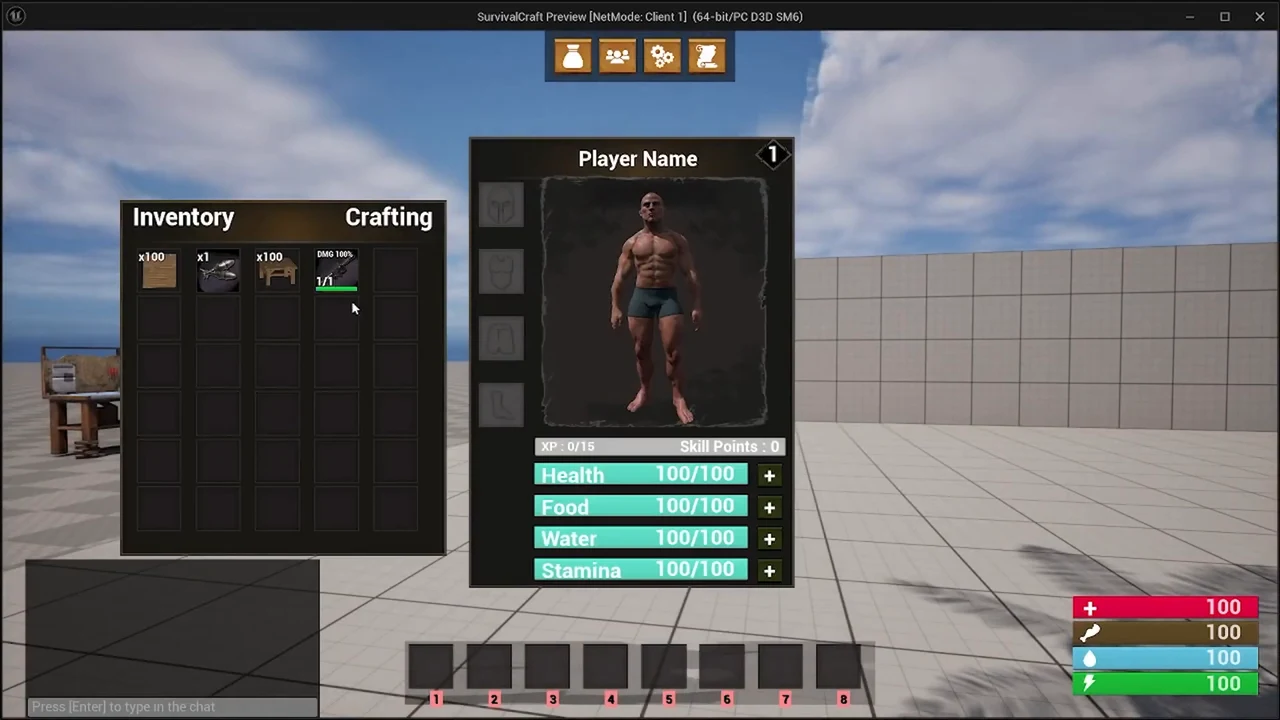
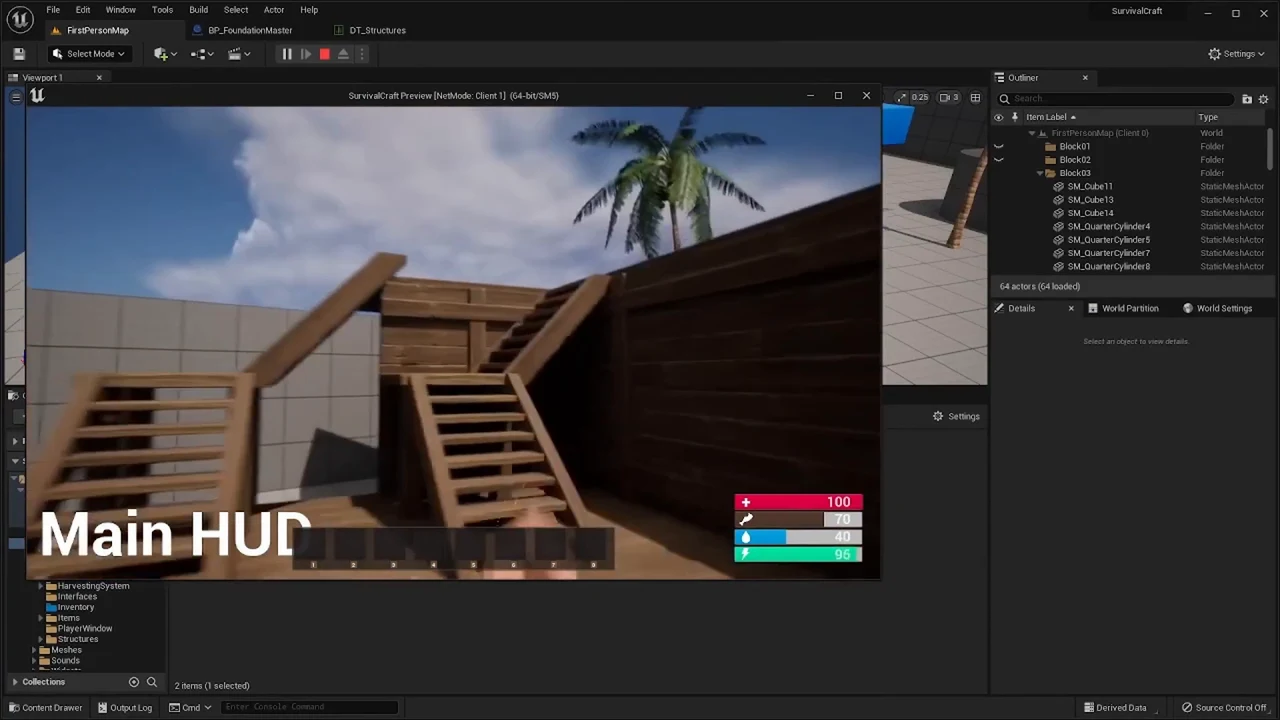
Digital Dynasty gave me a practical setting for working through the dependencies of a survival game. Resources move through inventory and crafting into tools and structures, while experience and skills shape what a player can do next. The final report documents that loop through design diagrams, interfaces and manual test records. The supplied presentation shows the prototype in action, including inventory, exploration, construction, combat and multiplayer test scenes.
The final-year report documents Unreal Engine 5, Blueprint scripting and Git/GitHub in the project workflow.
I worked on the Unreal Engine 5 project using Blueprint scripting, connecting survival activities, player interactions and persistent game state within the wider game.
I verified that creating an item consumes the required materials and that structures can be placed consistently with terrain and collision rules. These checks test how inventory, crafting and the world agree.
I verified movement, collisions and experience-based leveling, connecting immediate player input with the longer progression loop.
I verified saving and loading progress, including restored inventory and position. I focus on the state changes behind an interaction, as well as the experience the player sees.
Move through the world, encounter resources and bring collected materials into the inventory.
Relate the desired item to its resource and progression requirements.
Consume the required materials to create items, then place structures subject to terrain and collision rules.
Connect continued play to experience, leveling and skills that shape later survival activities.
Persist player progress and game state so that subsequent play can continue from the saved state.
The report connects collected resources with recipe requirements and item creation. My recorded validation checks material consumption during crafting; the focused clip shows the inventory, equipment and Stone Hatchet interface in the prototype.
Construction needs to connect inventory with terrain and collision rules. I verified structure placement in the final-year project. The focused construction clip shows placement previews and a timber staircase; the development map explains the checks without claiming it is the exact Blueprint implementation.
My documented checks cover movement, collisions, experience-based leveling and save/load restoration of inventory and position. These are historical project test records; the original showcase remains available alongside the new focused excerpts.
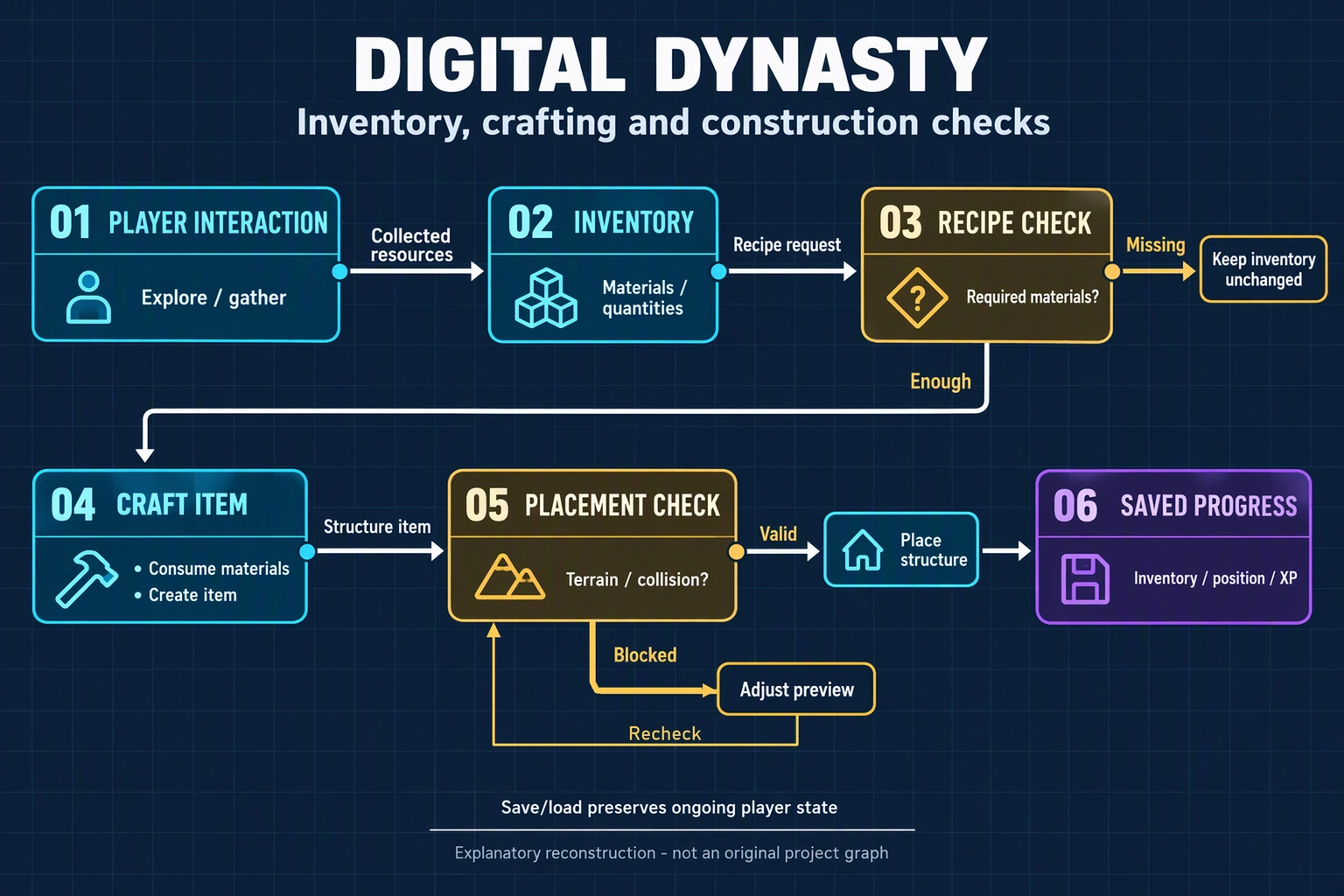
Inventory, recipe requirements, resource consumption and placement rules need to agree. A visible item-creation action is only one part of the state changes behind it.
Movement, terrain and collision constraints need to feel consistent with what the player sees. The report’s placement and movement tests focus on those boundaries.
The footage includes multiplayer test scenes and tribe interfaces. Expanded multiplayer, VR and cross-platform support remain future extensions in the report; the demonstration does not establish production hosting or large-scale reliability.
Digital Dynasty is my final-year project, developed within a team. The footage shows real gameplay and Unreal Engine demonstrations. The workflow summarizes documented systems, and the report’s manual test records reflect the project at that time.