Reporting experience
I work on the relationship between multilingual voice input, structured reports and the context needed by operational teams.
I’m designing a voice-first reporting workflow for security and multi-site operations, connecting spoken reports with procedures, review and shift summaries.
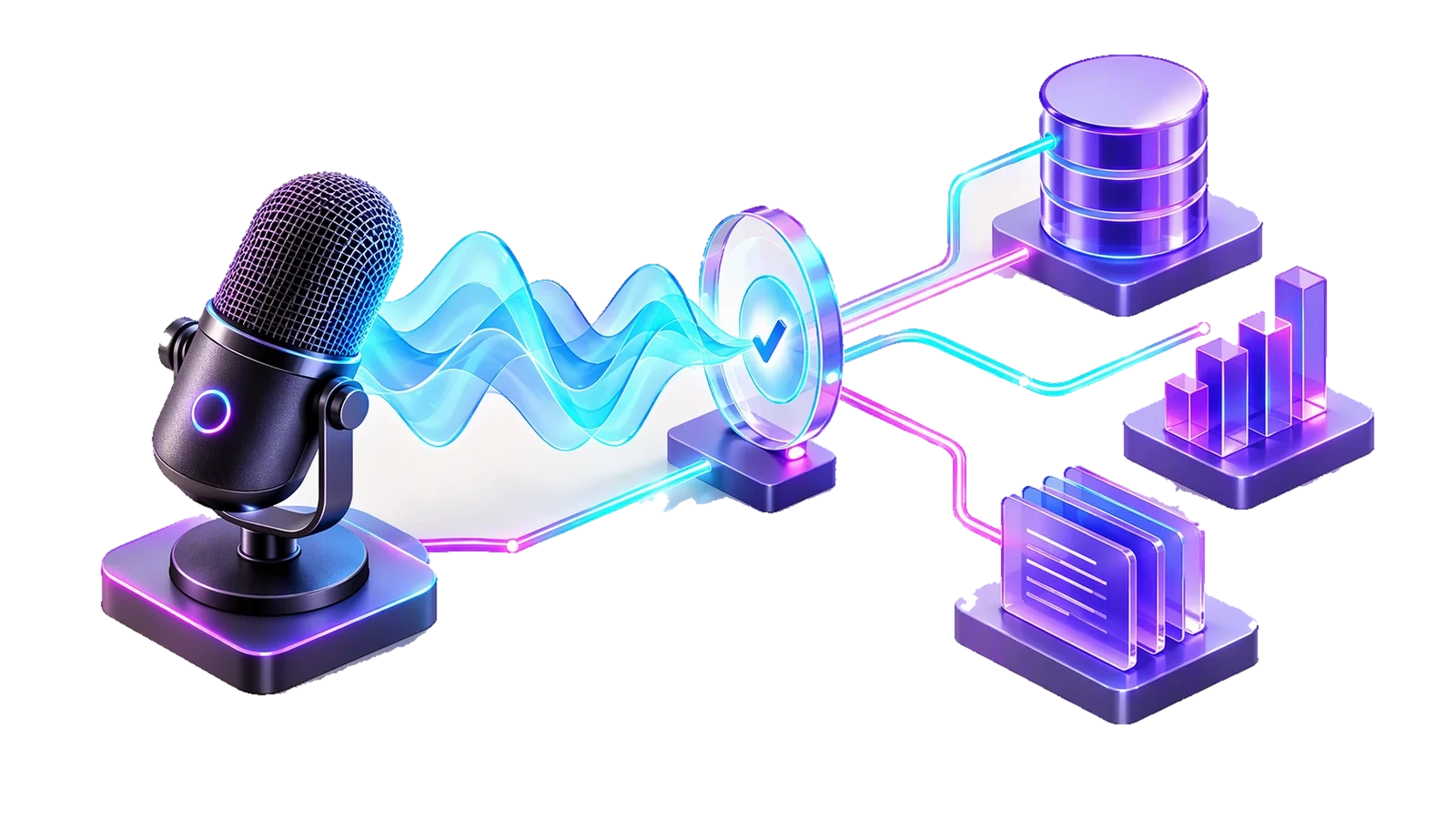
Frontline reports contain valuable context, but spoken observations and operational records serve different purposes. AegisOps explores that transition through agentic AI, retrieval of standard operating procedures, issue correlation and shift synthesis. The design also addresses tenant boundaries, offline synchronization and deployment requirements.
These technologies describe the reporting and retrieval design; they do not imply a verified production deployment.
I work on the relationship between multilingual voice input, structured reports and the context needed by operational teams.
My system-design work connects RAG-based SOP retrieval, issue correlation, verification and shift summaries.
The project’s design includes PII sanitization, multi-tenant access controls, PostgreSQL/pgvector and offline synchronization concerns.
Begin with a frontline observation expressed in the reporter’s language.
Organize the report and consider which sensitive details belong in subsequent processing.
Connect the observation with relevant SOP material and related issues.
Introduce a review boundary before treating generated interpretations as operational facts.
Bring the reviewed context into a concise view for operational follow-through.
Reports need enough detail to be actionable without unnecessarily propagating personal information into retrieval and summaries.
Offline reporting raises questions about duplicate records, ordering and conflicts when connectivity returns.
A clear AI-generated summary can still misinterpret a report. Verification matters independently of how confident the language sounds.
The sequence is a conceptual summary of a report-to-summary workflow and simplifies the architecture. It does not depict exact processing order, offline behavior or deployment topology; the considerations frame design questions, not confirmed implementation choices.